TL;DR: Master Amazon keyword rank tracking to improve visibility, optimize PPC, and grow organic sales. This guide covers tools, strategies, and real-world tactics for sellers at every level.
Key Takeaways
- Amazon keyword rank tracking is essential for optimizing both organic visibility and paid ad performance.
- Rankings fluctuate due to algorithm updates, competition, pricing, and customer behavior—consistent monitoring helps you stay ahead.
- Tools like SellerSprite’s Amazon Keyword Rank Tracker provide real-time insights, historical trends, and automated alerts to drive data-driven decisions.
- New products often experience a "honeymoon period" with temporary ranking boosts—capitalize on it with targeted PPC and reviews.
- Integrating rank data with sales, conversion, and ad metrics gives a full picture of product performance on Amazon.
Table of Contents
- What Is Amazon Keyword Rank Tracking?
- Why Rank Tracking Matters for Amazon Sellers
- How Amazon’s A9 & A10 Algorithms Work
- Key Features of a Good Amazon Keyword Rank Tracker
- How to Use Rank Data to Optimize Your Listings
- Tracking New Products: The Honeymoon Effect
- Setting Up Rank Alerts: When to Intervene
- Spoke Articles & Deep Dives
- FAQ
- References
Note on marketplaces: This guide is specifically optimized for the US market.
What Is Amazon Keyword Rank Tracking?
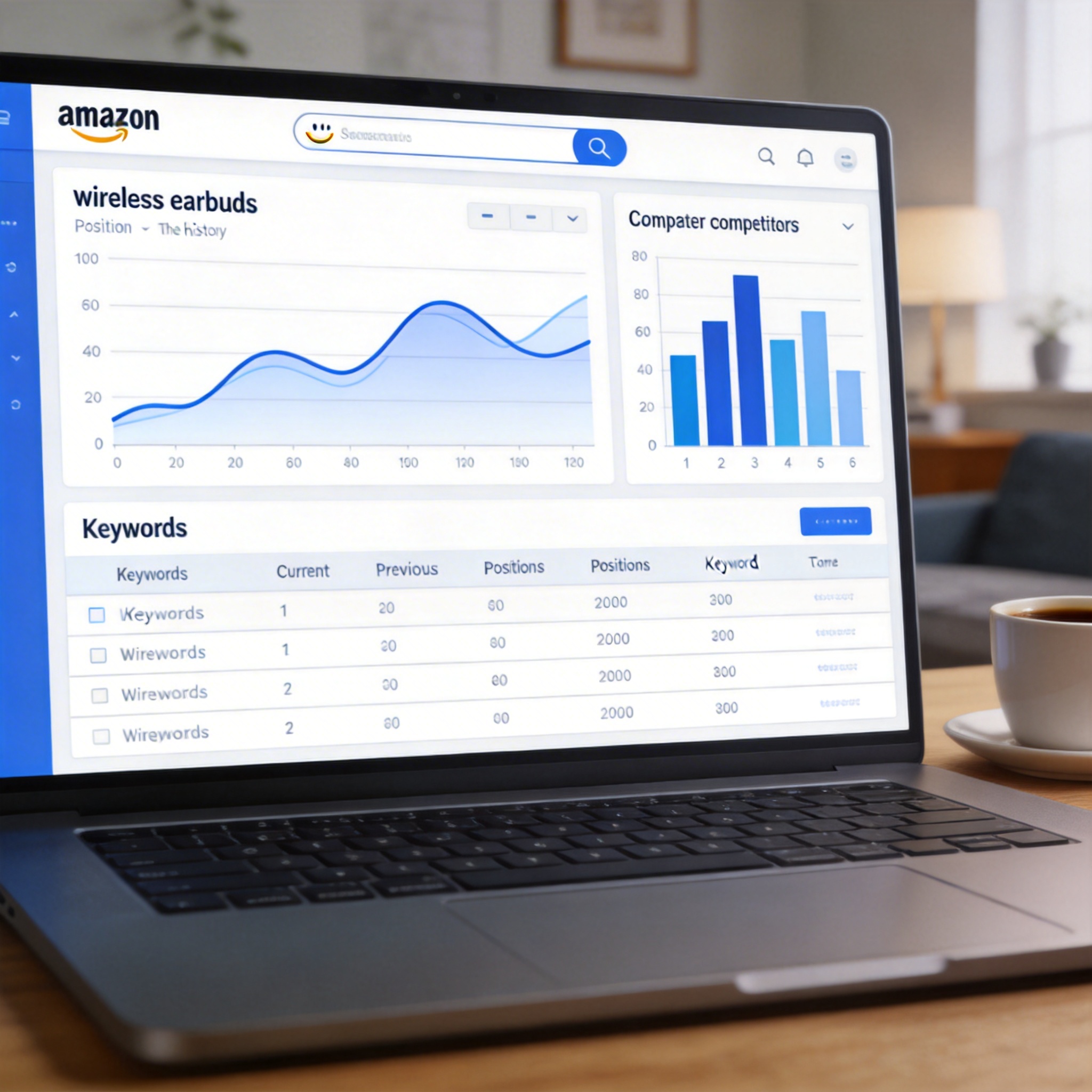
Amazon keyword rank tracking is the process of monitoring where your product appears in Amazon’s search results for specific keywords. For example, if you sell wireless earbuds and target the keyword "noise cancelling earbuds", rank tracking tells you whether your product shows up at position #3, #15, or page 5.
This isn’t just about vanity metrics. Your product’s position directly impacts visibility, click-through rates (CTR), and ultimately, sales. According to internal data from SellerSprite, products in the top 3 organic positions receive over 60% of all clicks for competitive keywords.
Rank tracking tools automate this process by scanning Amazon’s search engine results pages (SERPs) daily—or even hourly—for your chosen keywords. They log historical data, detect changes, and alert you when your product drops or climbs in rank.
Whether you're a new seller launching your first product or a brand managing hundreds of SKUs, understanding your keyword performance is foundational to Amazon success.
Why Rank Tracking Matters for Amazon Sellers
Many sellers focus only on sales and reviews, but neglecting keyword rank is like driving blindfolded. Here’s why rank tracking is non-negotiable:
1. Visibility Equals Sales
Amazon’s first page gets over 80% of all clicks. Products ranked below position #10 often go unnoticed. By tracking keyword ranks, you identify which terms drive visibility and which ones need optimization.
2. Optimize PPC Campaigns
Your organic rank influences how much you pay for ads. If your product ranks organically at #5 for "Bluetooth headphones", you may not need to bid aggressively in Sponsored Products. Conversely, a low organic ranking requires higher ad spend to maintain visibility.
Using rank data, you can adjust bids, pause underperforming keywords, or double down on high-converting terms.
3. Measure Listing Optimization Impact
Did your recent title update improve rankings? Did adding new images boost CTR? Rank tracking lets you A/B test changes and measure real impact. For instance, one SellerSprite user saw a 22% rank improvement within 7 days after optimizing backend keywords and bullet points.
4. Stay Ahead of Competitors
Top competitors are constantly optimizing. Rank tracking tools often include competitor benchmarking—so you can see who’s gaining ground and respond quickly. If a rival product jumps from #12 to #4 overnight, you’ll know to investigate their pricing, reviews, or ad strategy.
5. Build Long-Term Organic Growth
Amazon favors products that convert. Consistently high ranks signal relevance and trust to the algorithm. Over time, strong organic performance reduces reliance on paid ads and increases profitability.
How Amazon’s A9 & A10 Algorithms Work
To master rank tracking, you must understand the engine behind the rankings: Amazon’s search algorithm.
A9 Algorithm: The Foundation
A9 was Amazon’s original search algorithm, still influencing core ranking logic. It prioritizes:
- Relevance: How well your product matches the search query (title, bullets, backend keywords).
- Performance: Sales velocity, conversion rate, and order defect rate.
- Customer Experience: Reviews, return rate, and fulfillment method (FBA vs. FBM).
A9 rewards products that convert quickly. A product with fewer reviews but high conversion can outrank a bestseller with low CTR.
A10 Algorithm: The Evolution
A10, introduced around 2018, places even greater emphasis on customer-centric metrics. While Amazon hasn’t confirmed all details, industry consensus suggests A10 weighs:
- Click-Through Rate (CTR): How often users click your listing after seeing it.
- Conversion Rate (CVR): Percentage of clicks that result in a sale.
- Customer Engagement: Time on page, image views, Q&A interactions.
- External Traffic Impact: Sales from off-Amazon sources (e.g., social media, email) now contribute more to ranking.
This shift means even new products can rank quickly if they generate strong early engagement and conversions.
What This Means for Rank Tracking
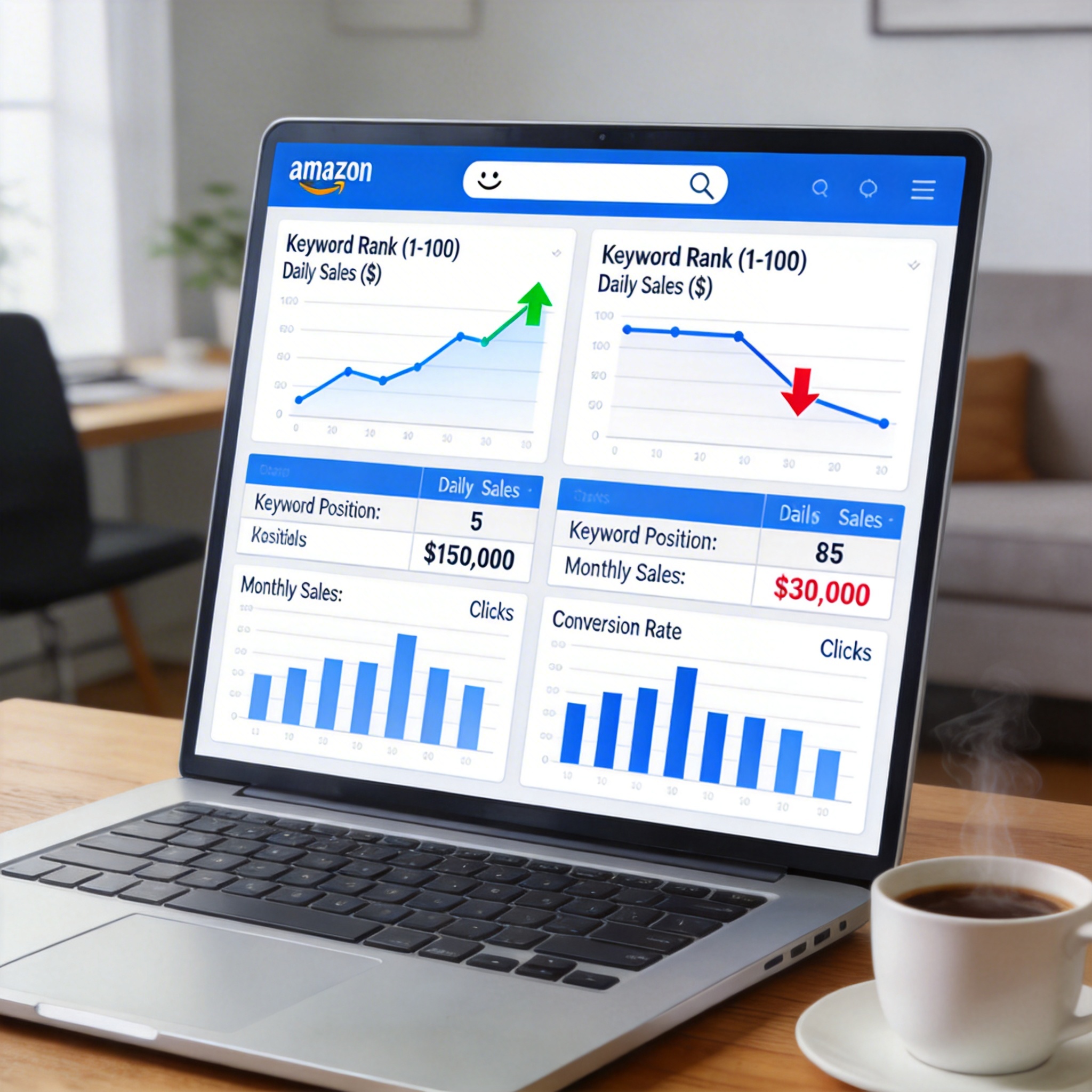
Because Amazon’s algorithm evolves constantly, your rank isn’t static. A product might rank #1 one day and #8 the next—even without changes on your end. That’s why daily tracking is essential.
Use rank data not in isolation, but alongside conversion metrics. A drop from #2 to #5 might not hurt sales if your CTR and CVR are improving.
Key Features of a Good Amazon Keyword Rank Tracker
Not all rank trackers are created equal. Here are the must-have features for any serious Amazon seller:
1. Accurate, Frequent Scans
Look for tools that scan Amazon SERPs at least once per day—preferably multiple times. Some advanced tools, like SellerSprite, offer hourly updates for high-priority keywords.
2. Historical Data & Trend Charts
You need more than a snapshot—you need trends. A good tracker shows rank movement over weeks or months, helping you correlate changes with listing updates or ad campaigns.
3. Competitor Rank Comparison
Track not just your rank, but your top 3–5 competitors. This reveals market dynamics and helps you benchmark performance.
4. Automated Alerts
Set alerts for significant rank drops (e.g., >3 positions) or climbs. This lets you react quickly—like increasing ad spend when you’re near the top.
5. Integration with Sales & Ad Data
The best tools combine rank data with sales, impressions, and PPC metrics. This holistic view shows whether a higher rank actually drives more revenue.
6. Mobile & Dashboard Access
Monitor performance on the go. A clean, intuitive dashboard makes it easy to spot trends and share insights with your team.
SellerSprite’s Amazon Keyword Rank Tracker includes all these features—and more, like AI-powered insights and automated reporting.
How to Use Rank Data to Optimize Your Listings
Rank tracking isn’t just about monitoring—it’s about action. Here’s how to turn data into results:
1. Identify High-Value Keywords
Focus on keywords where you rank between #4 and #15. These are “within striking distance” of the top spots. With minor optimizations or a small ad boost, you can break into the top 3.
Use tools like SellerSprite’s keyword research module to find high-volume, low-competition terms to target.
2. Optimize On-Page Elements
If your product ranks poorly for a relevant keyword, revisit your:
- Title: Include primary keyword near the front.
- Bullet Points: Highlight benefits and use natural keyword variations.
- Backend Search Terms: Add synonyms and long-tail phrases (no repeats).
- Images: High-quality, lifestyle shots improve CTR.
3. Adjust PPC Bidding Strategy
Use rank data to inform your Sponsored Products campaigns:
- If you rank organically in the top 3, consider lowering bids to save on ACOS.
- If you’re stuck at #8–12, increase bids to gain visibility and boost organic rank through sales velocity.
- Use exact match campaigns to dominate specific high-intent keywords.
For advanced tactics, see our guide on building profitable exact match campaigns.
4. Monitor Competitor Moves
If a competitor suddenly jumps in rank, investigate:
- Did they launch a coupon or reduce the price?
- Did they get a surge in reviews?
- Are they running aggressive ads?
Respond strategically—don’t just lower your price. Consider bundling, improving content, or running a short-term promotion.
Tracking New Products: The Honeymoon Effect
New products often experience a temporary ranking boost—known as the “honeymoon period.” Amazon gives new listings a chance to prove themselves by temporarily elevating their visibility.
This window—typically lasting 7 to 14 days—is critical. If your product converts well during this time, Amazon is more likely to maintain or improve its organic rank long-term.
How to Maximize the Honeymoon Period
- Launch with Reviews: Use Amazon’s Early Reviewer Program or Vine to get initial feedback.
- Run Targeted PPC: Focus on high-converting keywords to generate early sales velocity.
- Monitor Rank Daily: Use a rank tracker to see which keywords are gaining traction.
- Optimize Based on Data: If certain keywords drive clicks but not sales, refine your messaging.
One SellerSprite user launched a kitchen gadget and used rank tracking to identify a high-CTR keyword: "compact vegetable chopper." By optimizing their title and running a targeted ad, they reached #2 organically within 10 days—and stayed there.

Setting Up Rank Alerts: When to Intervene
Manual tracking is time-consuming and reactive. Automated rank alerts let you stay proactive.
Recommended Alert Triggers
- Rank Drop >3 Positions: Investigate potential issues (price change, negative review, competitor move).
- Rank Enters Top 3: Consider reducing ad spend to improve profitability.
- Rank Reaches Page 2 (Positions 11–20): Increase PPC bids or run a promotion to push into the top 10.
- New Keyword Entry: If your product starts ranking for a new keyword, assess its relevance and search volume.
How to Respond to Alerts
Don’t panic at every fluctuation. Short-term volatility is normal. But consistent downward trends require action:
- Check your pricing vs. competitors.
- Review recent customer feedback.
- Verify inventory levels (stockouts hurt rank).
- Run a short-term coupon or lightning deal.
Pro tip: Combine rank alerts with sales and ad performance alerts for a complete health check.
Spoke Articles & Deep Dives
This hub covers the fundamentals. For deeper insights, explore our related guides:
- How to Track Amazon Keyword Ranking – Step-by-step setup guide.
- How to Build Amazon PPC Exact Match Campaigns – Improve ranking and profitability.
- How Many Sales to Rank and Get Amazon Reviews – Understand the sales-to-review ratio.
- Amazon Brand Story Guide – Enhance brand trust and engagement.
These resources help you build a comprehensive Amazon growth strategy—from keyword research to brand building.
Next Steps
- Start tracking your Amazon keyword ranks with SellerSprite’s free trial.
- Choose 5–10 high-value keywords and monitor them daily for 30 days.
- Adjust your PPC and listing content based on rank trends.
- Explore the full SellerSprite suite to scale your Amazon business.
FAQ
Why do my Amazon keyword rankings fluctuate so much?
Rankings change due to algorithm updates, competitor activity, pricing shifts, inventory levels, and customer behavior. Short-term volatility is normal. Focus on long-term trends and combine rank data with sales and conversion metrics for a complete picture.
How can I boost the ranking for a new Amazon product?
Leverage the “honeymoon period” by launching with reviews (via Vine or Early Reviewer), running targeted PPC campaigns, and optimizing your listing for high-intent keywords. Monitor rank daily and adjust based on performance.
How often should I track Amazon keyword rankings?
Daily tracking is ideal. Some sellers use hourly updates for high-priority keywords during product launches or promotions. Consistent monitoring helps you detect trends and respond quickly.
What’s the best Amazon keyword rank tracking tool?
SellerSprite’s Amazon Keyword Rank Tracker is a top choice for its accuracy, frequency, competitor benchmarking, and integration with PPC and sales data. It’s trusted by thousands of sellers across the US marketplace.
Can I improve my Amazon ranking without ads?
Yes, but it’s slower. Focus on optimizing your title, bullets, images, and backend keywords. Encourage reviews, maintain competitive pricing, and ensure fast fulfillment (FBA helps). However, combining organic SEO with strategic PPC accelerates results.
References
- How to Track Amazon Keyword Ranking View
- How to Build Amazon PPC Exact Match Campaigns View
- How Many Sales to Rank and Get Amazon Reviews View
- Amazon Brand Story Guide View
By SellerSprite Success Team
The SellerSprite Success Team combines deep expertise in Amazon’s A10 algorithm, data analytics, and e-commerce growth strategies. With years of hands-on experience helping thousands of sellers optimize listings, manage PPC, and scale brands, we deliver actionable insights grounded in real-world performance data. Our content is trusted by startups and enterprise brands alike for its accuracy, depth, and practical value.