TL;DR: This step-by-step Amazon product research workflow for 2026 helps sellers identify profitable, winnable products using data-driven validation across demand, competition, economics, and differentiation, backed by actionable tools and checklists.
Key Takeaways
- Successful Amazon product research in 2026 requires balancing demand, competition, profitability, and execution fit, not just finding "low competition" items.
- Use keyword clusters, not single terms, to define niches and uncover buyer intent gaps that top listings fail to address.
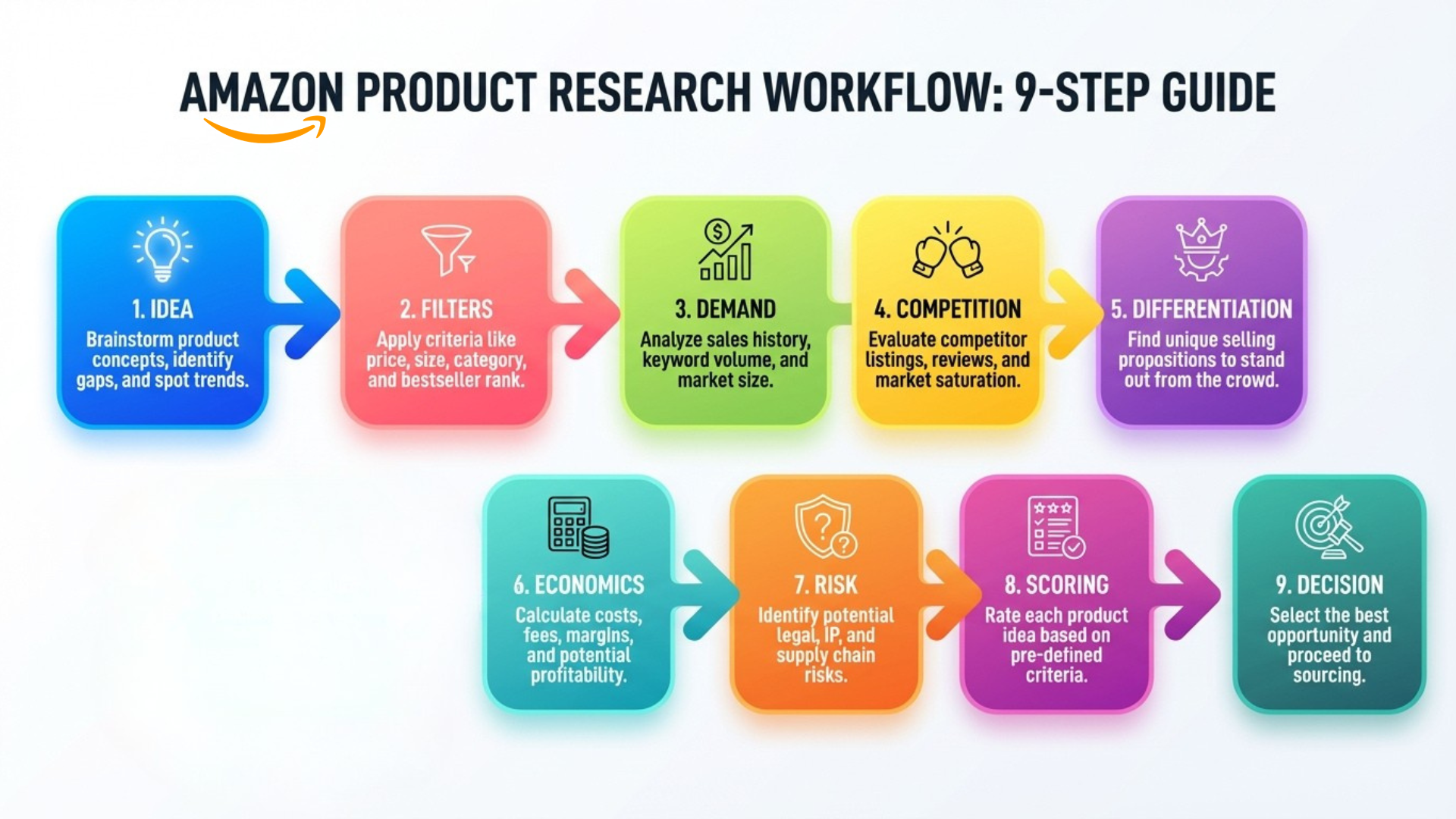
- A structured 9-step workflow, from idea generation to go/no-go scoring, reduces risk and increases launch success rates for new and growing sellers.
Table of Contents
- What "Good" Amazon Product Research Means in 2026
- Set Your Constraints and Success Criteria
- Step 1: Generate Product Ideas Using Buyer Language
- Step 2: Validate Demand
- Step 3: Measure Competition
- Step 4: Find "Winnable Entry Points" With Keyword-Level Competition
- Step 5: Validate Differentiation Using Reviews
- Step 6: Economics Reality Check
- Step 7: Validate with Competitor Data
- Step 8: Risk Checks
- Step 9: The Go/No-Go Decision
- Mini Walkthrough: One Product Idea → Full Validation in 45 Minutes
- Common Mistakes in Amazon Product Research (2026 Edition)
- FAQ
- References
Note on marketplaces: This guide is specifically optimized for the US market.
What "Good" Amazon Product Research Means in 2026
In 2026, Amazon product research is no longer about chasing low-competition keywords or copying bestsellers. It's a strategic process that identifies products with sustainable demand, manageable competition, solid margins, and clear paths to differentiation. The goal isn't just to list a product; it's to launch a business with a competitive edge.
Definition:
Amazon product research is the systematic process of identifying, validating, and prioritizing product opportunities on Amazon using data on demand, competition, economics, and buyer behavior.
Outcome:
A shortlist of high-potential products with documented validation across all critical success factors, which is ready for sourcing and launch planning.
The 2026 Reality: Competition, Ad Costs, and Speed
Amazon in 2026 is more competitive than ever. Average ACOS (Advertising Cost of Sale) has risen to 30-40% in many categories due to increased ad spend. Organic ranking is harder to achieve without paid traffic. Sellers must move faster from idea to launch, and validate earlier to avoid inventory stranded in FBA warehouses.
The 4 Pillars of a Winning Product
A product isn't "good" just because it sells. It's good if it meets four criteria:
- Demand: Consistent, measurable search volume across multiple long-tail keywords.
- Competition: Winable SERPs, which means no dominant brands, low review moats, and room for differentiation.
- Economics: Healthy margins after FBA fees, COGS, and PPC costs (target 25-35%).
- Execution Fit: Aligns with your sourcing capabilities, compliance knowledge, and operational capacity.
What This Workflow Produces
This 9-step workflow transforms raw ideas into validated opportunities. You'll go from a broad keyword list to a shortlist of 3-5 products, each with documented evidence across all four pillars. The final output? A go/no-go decision backed by data, not gut feeling.
Set Your Constraints and Success Criteria (So You Don't Chase Bad Ideas)
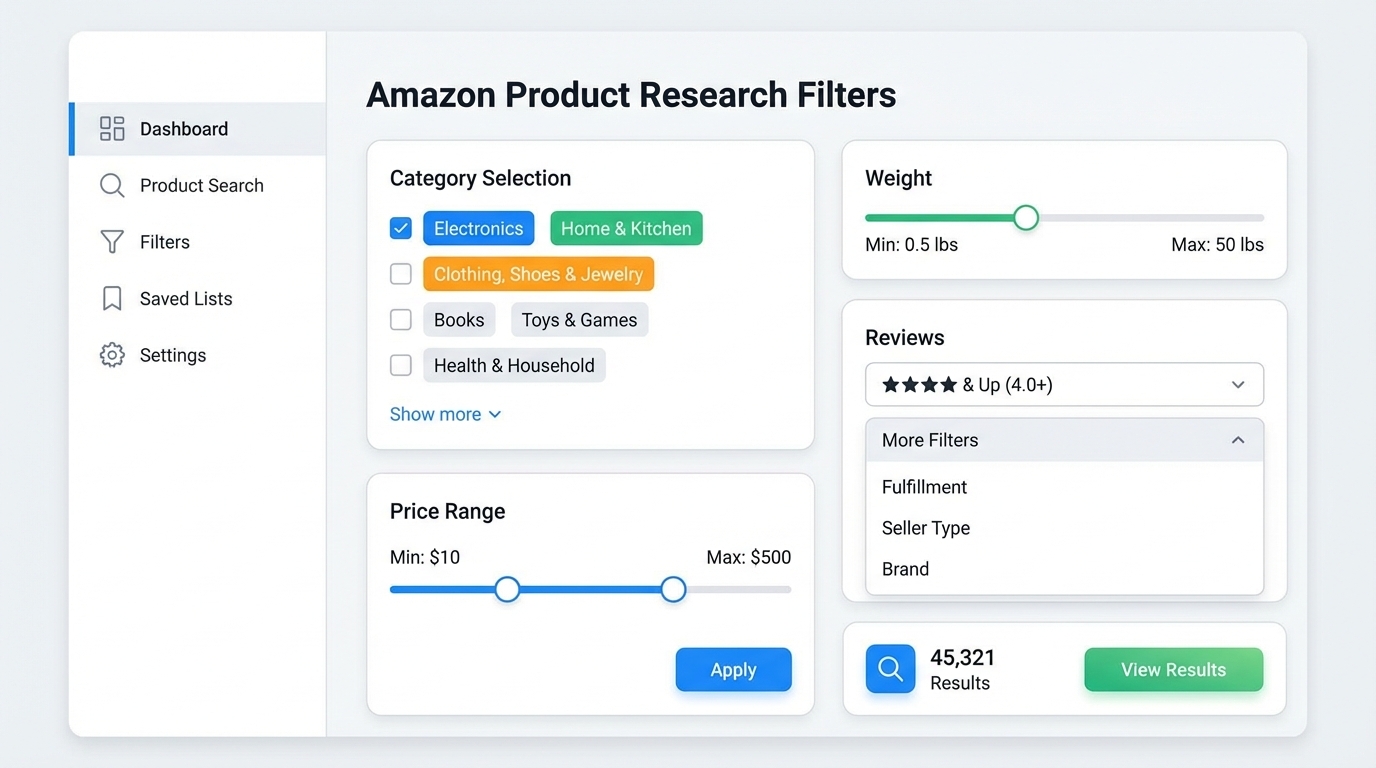
Before diving into data, define what you can and cannot sell. This prevents wasted time on products you can't source, ship, or legally sell. Constraints act as filters; success criteria define what "winning" looks like.
Constraints Checklist
Ask yourself:
- Budget: What's your max COGS per unit? Total launch budget?
- Size/Weight: Can you handle oversized or heavy items?
- Compliance: Are you equipped for FDA, FCC, CPSC, or other certifications?
- Seasonality: Will this sell year-round or only during holidays?
- Return Risk: Is it prone to sizing issues, fragility, or expectation mismatch?
Success Criteria
Define your targets:
- Price Band: $25-$45 is ideal for impulse buys and margin flexibility.
- Margin Target: Minimum 25% net profit after all costs.
- Break-even ACoS: Must be above 30% to allow for ad scaling.
- Review Moat Threshold: Top 10 products have fewer than 300 reviews on average.
Build an "Avoid List"
Steer clear of:
- Hazmat items (flammable, pressurized, etc.)
- Products with restricted claims (e.g., "cures," "medical device")
- High-return categories (e.g., apparel, jewelry)
- Items requiring complex assembly or instructions
✅ One-Page Product Filters Checklist
- Price: $15-$60
- Weight: Under 2 lbs
- COGS: Under $12
- Non-seasonal
- No compliance red flags
- Low return risk
- No hazmat
- No restricted claims
Step 1: Generate Product Ideas Using Buyer Language (Keywords First)
Start with how buyers search, not with products. Use keyword research to uncover real problems people are trying to solve. A niche isn't a product; it's a cluster of related search intents.
Start with Problems and Use Cases (Jobs-to-be-Done Thinking)
Ask: What job is the buyer hiring this product to do? For example, "dog leash" is a product. "hands-free dog leash for running" is a job. The latter reveals a specific need and higher intent.
Amazon-Native Idea Sources
Autocomplete Mining (A-Z + Modifier Stacking)
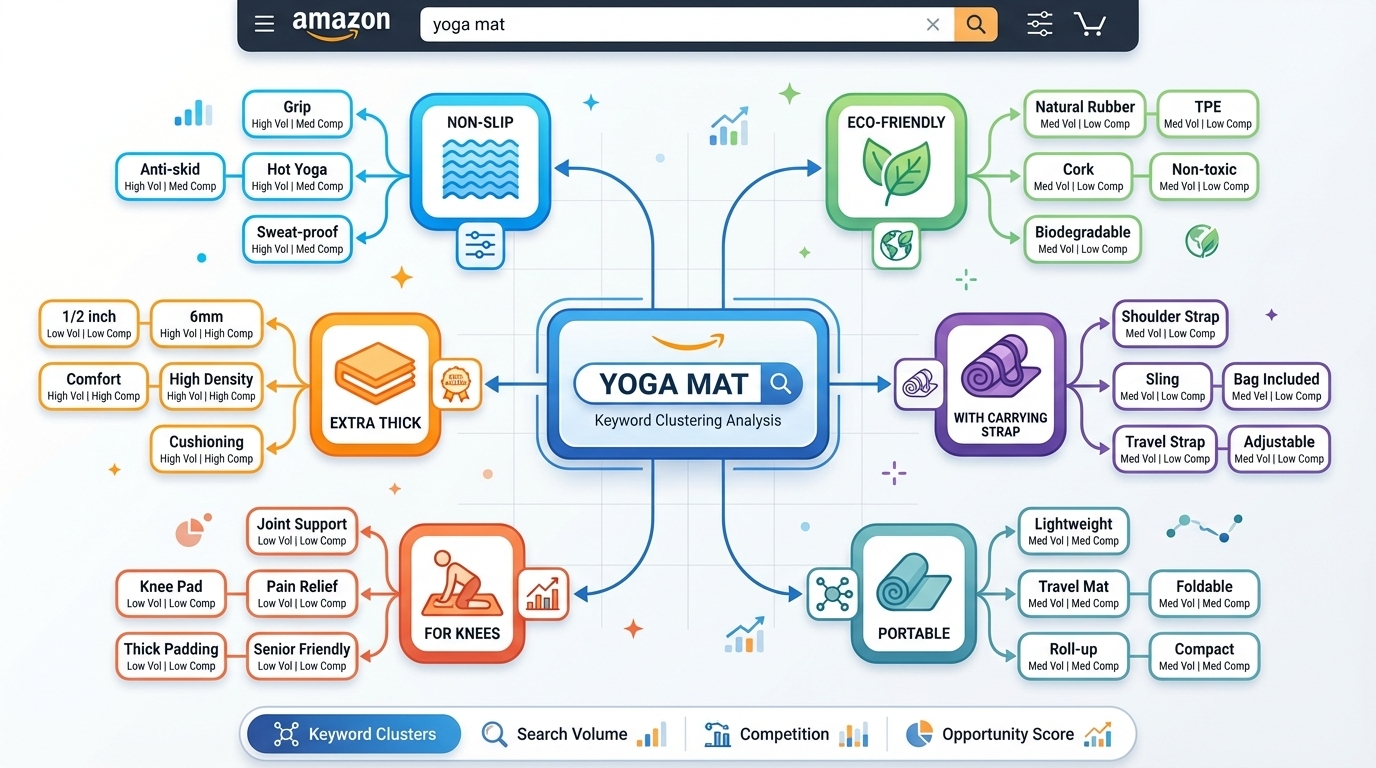
Type a base keyword (e.g., "yoga mat") into Amazon search and note all autocomplete suggestions. Stack modifiers: "non-slip," "extra thick," "eco-friendly," "with carrying strap."
Category Filters & Attributes
Browse category filters, such as material, size, color, and compatibility. These reveal buyer priorities. For example, "bamboo cutting board" vs. "plastic" shows material preference.
Best Sellers / New Releases Language Patterns
Analyze titles and bullet points of top sellers. What keywords do they repeat? What benefits do they emphasize? This reveals what converts.
Build Keyword Clusters (A "Niche" is a Cluster)
Group related keywords into clusters. For example:
- "non-slip yoga mat"
- "extra thick yoga mat for knees"
- "eco-friendly yoga mat with carrying strap"
This cluster defines a niche: comfort-focused, portable, sustainable yoga mats.
✅ 20-50 Keyword Clusters (Idea Bank)
Export these into a spreadsheet. Each cluster is a potential niche to validate.
Step 2: Validate Demand (Avoid the One-Keyword Trap)
Don't rely on a single keyword's search volume. True demand is shown by multiple long-tail variations all pointing to the same need. Use tools like SellerSprite Keyword Research to analyze search volume across clusters.
Demand Breadth: Multiple Long-Tails Supporting the Same Niche
A healthy niche has 5-10 long-tail keywords, each with 1k-10k monthly searches. If only one keyword has volume, it's likely a fluke or seasonal spike.
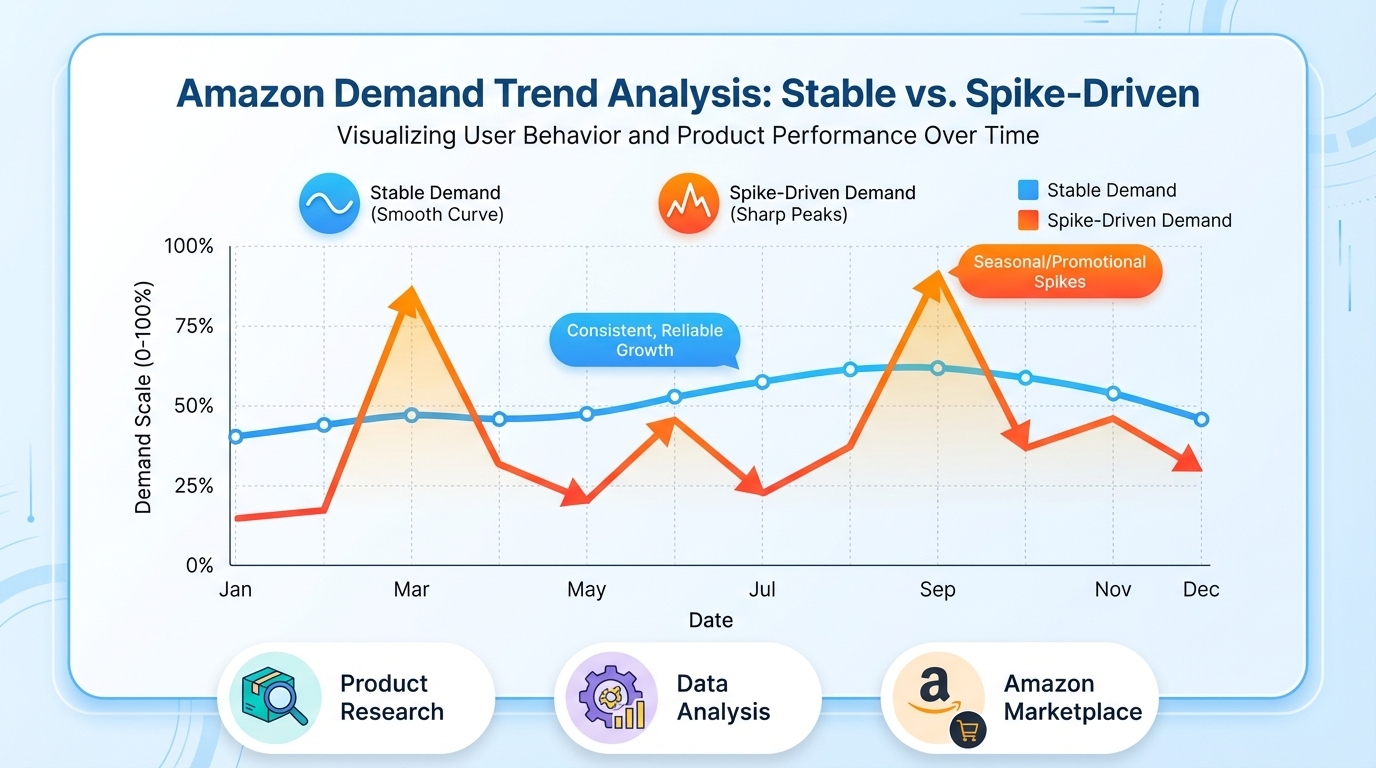
Trend Stability: Evergreen vs. Seasonal vs. Spike-Driven
Use trend data to assess stability. Evergreen niches (e.g., kitchen tools) are safer than spike-driven ones (e.g., holiday decor).
Simple Rule: Stable Demand Beats Viral Spikes (Unless You Can Move Fast)
Most sellers can't scale fast enough to capitalize on viral trends. Focus on steady, predictable demand.
Buyer Intent Signals: Purchase-Ready vs. Browsing Queries
Look for keywords with modifiers like "buy," "best," "review," "near me," or "with X feature." These indicate purchase intent.
📊 Demand Decision Tree
- Continue: 5+ long-tails, 1k+ volume each, stable trend, high intent
- Watchlist: 2-4 long-tails, moderate volume, seasonal pattern
- Reject: Single keyword, declining trend, low intent
Step 3: Measure Competition (SERP, Offer, and Brand Dominance)
Competition isn't just about the number of sellers. It's about how hard it is to rank and convert. Analyze the first page of search results like a battlefield.
SERP Snapshot Checklist
Review Moat (Median Reviews in Top 10)
If the top 10 listings have 500+ reviews each, you'll need a massive review acquisition strategy to compete.
Rating Strength (How Many 4.5+ with High Review Counts)
Multiple 4.5-star listings with 200+ reviews indicate strong customer satisfaction and loyalty.
Ad Density (Sponsored Placements Dominating Page One)
More than 3 sponsored ads? Expect high CPCs and aggressive competitors.
Listing Quality (Images, A+, Video, Clarity of Differentiation)
Are top listings using professional photos, videos, and A+ content? If yes, your listing must match or exceed that bar.
Brand Dominance Test (Is the Niche Controlled by 1-2 Brands?)
If one brand owns 6+ of the top 10 spots, they likely have pricing power and loyalty. Avoid unless you can differentiate clearly.
Variation Complexity (Do Leaders Win with Huge Variation Matrices?)
If top sellers offer 20+ variations (size, color, bundle), they're winning on selection. You'll need a strong reason to win with fewer options.
✅ Repeatable Competition Snapshot Scorecard
- Review Moat: Low (<300), Medium (300-600), High (>600)
- Ad Density: 0-1, 2-3, 4+
- Brand Dominance: Single brand owns >50% of top 10?
- Listing Quality: Poor, Good, Excellent
Step 4: Find "Winnable Entry Points" With Keyword-Level Competition
Even in competitive niches, there are long-tail keywords with weak competition. These are your entry points. Win here first, then expand.
Identify Long-Tail Keywords with Clear Intent and Weak Listing Alignment
Look for keywords where the top results don't fully match the search intent. For example, "yoga mat for bad knees" but results show generic mats.
Spot Relevance Gaps (Buyers Search It, Results Don't Match Well)
Use reverse ASIN research to see what keywords competitors rank for. If they're missing key long-tails, that's your opening.
Build a Launch Ladder
Long-tail (Win) → Mid-tail (Expand) → Head Terms (Optional Later)
Start with low-competition, high-intent long-tails. Rank and get reviews. Then target broader terms. Never start with head terms.
Step 5: Validate Differentiation Using Reviews (Build What Buyers Actually Want)
Top products aren't perfect. Their negative reviews reveal unmet needs. Use this to build a better product.
Review Mining: Frequency × Severity Pain Points
Sort negative reviews by "most recent" and "most helpful." Look for recurring complaints (frequency) that impact core functionality (severity).
"Fix / Improve / Add" Roadmap (Turn Gaps into Specs)
For each pain point:
- Fix: "mat slips on hardwood" → add non-slip bottom
- Improve: "too thin" → increase thickness to 8mm
- Add: "no carrying strap" → include detachable strap
Positioning That Matches Demand Language
Use the exact phrases buyers use in your title and bullets. If they say "for bad knees," say "for bad knees."
🛠️ Pain Point → Product Change → Listing Promise
Pain: "Mat rolls up during use" → Fix: Add side seams → Promise: "Stays flat during your entire workout"
Step 6: Economics Reality Check (Profit After Fees + PPC)
A product can have demand and low competition but still lose money if PPC costs eat margins. Validate economics early.
Quick Margin Math (COGS + FBA + Prep + Returns Buffer)
Example: $30 price, $10 COGS, $8 FBA, $1 prep, $1 returns → $10 gross profit = 33% margin.
PPC Feasibility (CPC vs. Break-even ACoS)
If CPC is $1.00 and conversion is 10%, you need 10 clicks per sale → $10 ad spend → 33% ACoS. If your break-even is 30%, this is risky.
Price Band Strategy
$25-$45 works because it's high enough for margins but low enough for impulse buys. Avoid sub-$15 (low margin) and over-$60 (high return risk).
Operational Fit
Can you source it reliably? Is it fragile? Are MOQs too high? These impact long-term profitability.
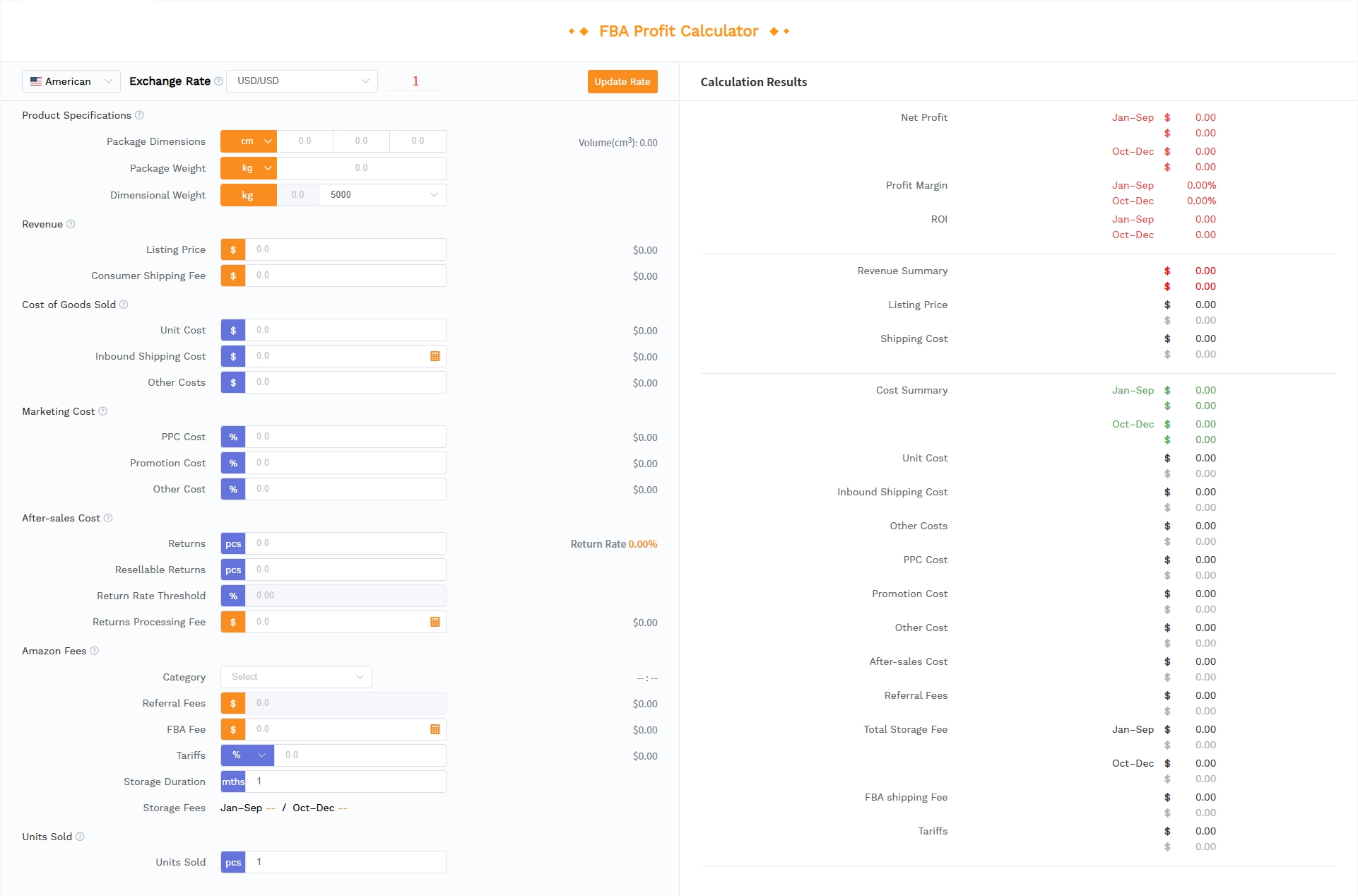
✅ Profit & PPC Feasibility Calculator Inputs
- Target Price
- COGS
- FBA Fees
- Expected CPC
- Conversion Rate
- Return Rate
Step 7: Validate with Competitor Data (Reverse ASIN + Keyword Gap Logic)
Use tools like SellerSprite to reverse-engineer top competitors' keywords. This confirms real demand clusters.
Reverse ASIN to Confirm Real Demand Clusters
Enter a top seller's ASIN to see what keywords they actually rank for, not what you assume.
Keyword Gap: What Competitors Win That You Could Own
Find keywords your competitors rank for but you could target with a better listing.
Red Flags: Demand Dominated by Branded Terms
If 70% of traffic comes from branded searches (e.g., "Nike yoga mat"), it's hard to compete as a generic seller.
Step 8: Risk Checks: Compliance, IP, and Returns (Don't Skip This)
Many product ideas fail post-launch due to avoidable risks. Check these before ordering inventory.
Compliance Quick Scan
Check if your product needs FCC, FDA, CPSC, or other certifications. Restricted categories (e.g., health, safety) require approvals.
IP Sanity Check
Search USPTO and Amazon for trademarks and design patents. Avoid products with active IP protection.
Returns Risk Predictors
High return rates come from sizing ambiguity, fragility, or "not as described." Address these in listing and packaging.
Step 9: The Go/No-Go Decision (A Simple Scoring Model for 2026)
Use a scoring model to make objective decisions. No more guessing.
Opportunity Score Formula
Opportunity Score = Demand × Intent × Ability-to-Win × Profitability × Operational Fit
Rate each factor 1-5. Multiply. Score ≥ 200 = go. <100 = reject.
📈 Opportunity Score Example
Demand: 4 × Intent: 5 × Ability-to-Win: 4 × Profitability: 4 × Fit: 4 = 1,280 → GO
Reject Rules (Any Factor = 1 → Reject)
If any pillar scores a 1 (e.g., unfixable compliance issue), reject the product. No exceptions.
Build Your Final Shortlist (Top 3) + Next Actions
Pick your top 3 opportunities. For each, document: keyword cluster, differentiation plan, sourcing lead, and launch timeline.
Mini Walkthrough: One Product Idea → Full Validation in 45 Minutes
Let’s validate "ergonomic gardening trowel for seniors."
Build the Keyword Cluster
"ergonomic garden trowel," "easy grip trowel for seniors," "lightweight gardening tool for elderly."
Run Demand + Competition Snapshot
Total volume: 8k/month. Top 10 avg. reviews: 180. Ad density: 2. Brand dominance: none. → Winable.
Extract Top 3 Differentiation Opportunities
1. "Handle hurts hand" → cushioned grip. 2. "Too heavy" → aluminum shaft. 3. "Rusts" → stainless steel.
Run Economics + PPC Feasibility
$32 price, $11 COGS, $8 FBA → 40% margin. CPC $0.80 → feasible ACoS. → Green light.
Make the Decision and Document It
Score: 4×5×4×4×4 = 1,280 → GO. Add to shortlist.
Common Mistakes in Amazon Product Research (2026 Edition)
Confusing Low Demand with Low Competition
Just because few sellers are competing doesn't mean anyone wants it. Validate demand first.
Chasing Head Terms with "Review Fortresses"
Don't try to beat 1,000-review leaders on "yoga mat." Start with long-tails.
Ignoring PPC Feasibility Until After Inventory Arrives
If CPC is too high, you'll lose money on every sale. Check before sourcing.
Copying Products Instead of Owning a Differentiation Angle
Generic products fail. Solve a specific problem better than anyone else.
Not Documenting Assumptions and Results
Without documentation, you can't learn from wins or losses.
FAQ
What's a "good" Amazon niche size for beginners in 2026?
A good niche for beginners has 5-10 long-tail keywords with 1,000-10,000 monthly searches each, stable demand, and top products with fewer than 300 reviews. Avoid niches dominated by brands or with high ad density.
What are the best tools for Amazon product research in 2026?
Top tools include SellerSprite, Helium 10, and Jungle Scout. SellerSprite excels in keyword clustering, reverse ASIN analysis, and winnability analysis, critical for 2026's competitive landscape.
How do I find profitable products to sell on Amazon?
Use a step-by-step workflow: define filters, generate keyword clusters, validate demand and competition, analyze reviews for differentiation, check economics and PPC feasibility, and score opportunities.
What is the difference between manual and automated Amazon product research?
Manual research uses Amazon browsing, autocomplete, and spreadsheets. It's time-consuming but flexible. Automated research uses tools like SellerSprite to analyze keywords, competition, and profitability at scale. Automation is faster and more accurate, especially for data-heavy steps like reverse ASIN and keyword gap analysis.
Next Steps
- Explore the Amazon Product Research Guide for deeper strategies.
- Try SellerSprite's Product Research Tool to automate your workflow.
References
- Amazon Product Research Guide View
- Advanced Amazon Product Research Playbook View
- Discover High-Potential Amazon Products View
By SellerSprite Success Team
The SellerSprite Success Team combines 10+ years of Amazon selling experience with cutting-edge AI-powered research tools. We help new and growing sellers find profitable products, validate opportunities, and scale sustainably using data-driven workflows trusted by thousands of brands worldwide.